Food Matters: You Can’t Out-Exercise a Bad Diet
While exercising is definitely beneficial, exercise alone is not the miracle worker most people think it is.
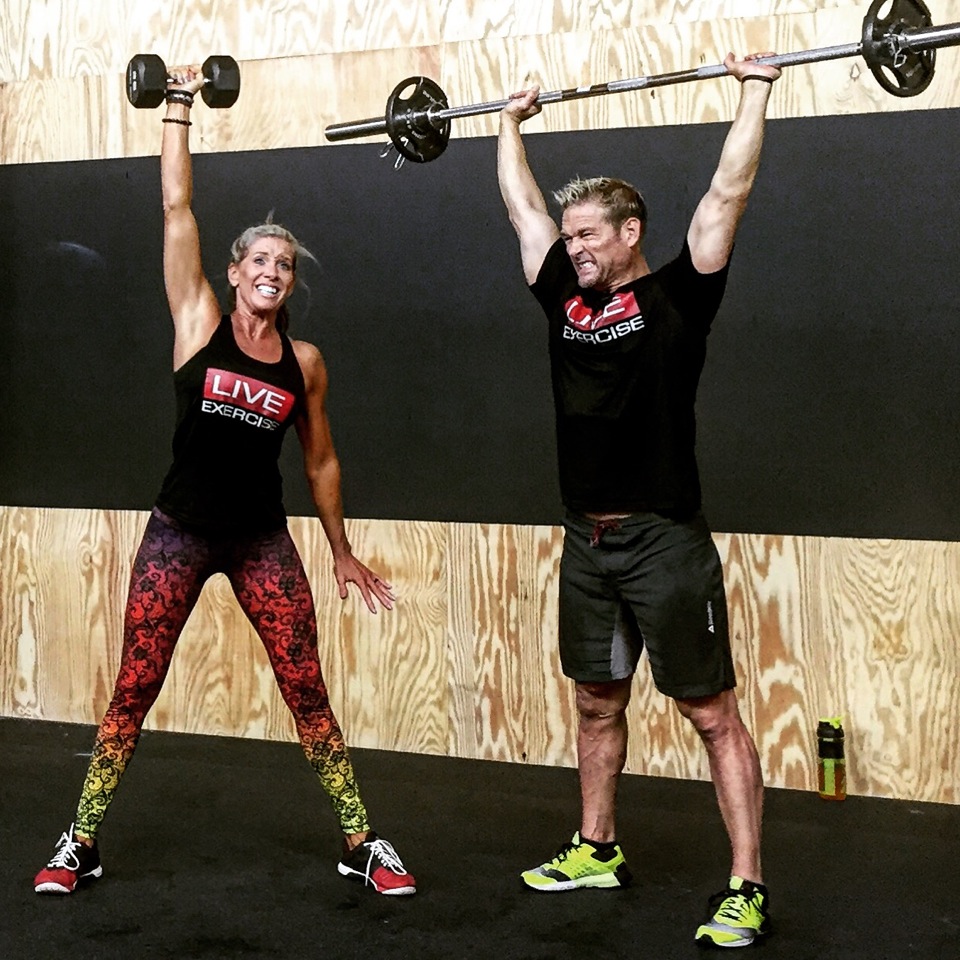 I’m in the fitness business. I am a certified trainer and gym owner. I lead our challenges and transformation programs at our gym, Lift Vero in Vero Beach. I also lead workouts and provide exercise instruction for Bodylastics. So, please know, I write this with all honesty and sincerity.
While I do believe in exercise, exercise alone is not the answer to your weight loss woes. I know—that’s not very encouraging to hear from a fitness professional, but don’t you want the truth?
Of course it’s my job to encourage people to get more active and exercise, but people need to have a realistic understanding of how exercise and eating work together so they can get the results they’ve always wanted. People need the truth, and the truth has a tendency to hurt sometimes. I always say “You can hate me now, but I know you’ll love me later.”
Now, it’s time to get to the bottom of the truth. And when we do, the truth will set you free!
Fact vs Fiction
 Let’s start by clearing up some of the myths and misconceptions surrounding weight loss. Millions of people are frustrated, overwhelmed, and unsure whom to trust. When you desperately want results, it’s easy to be drawn to anything promising a dramatic transformation.
That desperation makes consumers an easy target. The weight-loss industry often relies on exaggerated claims, carefully edited before-and-after photos, and success stories that leave out important details. That doesn’t mean every company or product is dishonest—but the marketing is not always as transparent as it should be.
The U.S. weight-loss market has grown from an estimated $65 billion in 2012 to a record $135 billion in 2025, fueled largely by the rapid growth of prescription weight-loss medications. Yet obesity remains remarkably common: 40.3% of American adults have obesity, and another 31.7% are considered overweight. Clearly, spending more money has not solved the problem. Some treatments absolutely can help, but no product replaces the need for sustainable habits, proper guidance, and a plan you can realistically maintain. (Info from Marketdata and CDC)
“If it sounds too good to be true, it probably is. If it looks like work, it probably works.”
Unfortunately, misinformation is all around us. So much so that it is practically impossible to figure out what is fact or what is fiction. Well, let me give you a really great tip. If it sounds too good to be true, it probably is. If it looks like work, it probably works. That should clear up about 94.99% of the confusion. There goes all the weight loss pills, miracle supplements, magic weight loss gimmicks, multi-level marketing scams, fad diets and all the other crazy apparatuses claiming to give you a six-pack in six minutes. Gone!
So now that all the riff-raff is out of the equation, we can focus on what we know works–diet and exercise. I know, big surprise–but I think there will be some little surprises as you continue to read, so stay with me.
 The Truth About Exercise
Exercise is a funny thing. It’s incredibly rewarding if you do it correctly, and it can sculpt your body into the most amazing shape – IF (big “if” here) you get your diet in shape too. But, putting most of your effort into exercise alone is like detailing your car and keeping a cover on it. No one will see your hard work unless you unveil the beautiful strong machine under the fat.
Don’t quite believe me? Maybe you are thinking of that one annoying friend who brags about eating pizza and having abs. Or, maybe you know someone who actually lost weight doing some crazy workout program, but they didn’t admit to changing their diet. My goal is to convince you of the truth. Food matters.
Just look at Nikki’s before-and-after photos. She was always a hard worker in the gym, but what finally got her results was applying that same discipline at home in the kitchen.
Food vs Exercise
 If exercise alone really were the solution to weight loss, I should be able to run a few times a week and drop pounds, so why don’t I lose weight when I increase my cardio? Exercise burns calories, but it can also increase my appetite. I may burn only 300 calories on a three-mile run, yet I can consume those calories again in three minutes flat if I’m not careful.
As a result, I have learned to be very protective of my calories. I treat my body’s calorie budget like my bank account, tracking what comes in and what goes out. Just like money, calories are much easier to spend than they are to earn back through exercise. Ultimately, it doesn’t matter how hard I work if I’m careless with my calorie budget. Is this starting to make a little more sense?
 So, if I want to lose weight, I have to be picky about how I spend my calories, and that means I need to live on a tighter budget. I use the Lose It! App to help me set that budget, and I track everything going in and out.
I’ve tried losing weight without tracking calories, and it has never worked for me. But when I consistently track what I eat, I can get into the best shape of my life. In fact, I reached my leanest physique—competing at 10% body fat and taking first place in an NPC Bikini competition—and the biggest change I made was simply logging my calories every single day until I reached my goal.
I didn’t work out harder than I ever had before. As a matter of fact, I’ve worked out harder for much less impressive results. I actually felt a little guilty because I saw other competitors work much harder in the gym, but I was working my hardest in the kitchen. The key to my success was absolutely, hands down, tracking my food intake.
Let me give you some more realistic examples to put it all into perspective.
The Cost

You can make much better decisions when you know the “cost.” When you pick out a shirt, what do you do next? You check the price to decide whether it’s worth it. Suddenly, that awesome shirt may look downright hideous once you see what it costs! Knowing the price helps you make an informed decision instead of relying on emotion alone.
In the same way, knowing the calorie “cost” of your food makes it easier to make informed choices. A burger, a small order of fries, and a small soda can easily add up to around 1,000 calories or more. Once you see that number, you may decide the meal simply isn’t worth it—or you may choose a smaller portion, skip the soda, or make another adjustment.
And it’s not just fast food. A restaurant salad may sound healthy, but toppings, dressing, and a glass of wine can push the meal well beyond 1,000 calories. Depending on your body size and the activity, that can take hours of exercise to burn and only minutes to eat.
Do you get the picture? Exercise is incredibly important, but it’s very difficult to out-exercise consistently excessive calorie intake. If fat loss is your goal, what you eat matters—a lot.
You can’t out-exercise a poor diet.
Food Matters
 So, hopefully, by now you believe me, and you are beginning to see just how much food really does matter. In fact, we require our clients and challengers to log food in apps like the LoseIt app. We spend a great deal of time educating our clients about food and teaching them how to eat according to their goals. We remind our clients daily (normally during the toughest part of their training, like during the middle of a tough cardio blitz) of how they can erase all that hard work in five minutes of poor food choices.
The truth is, our clients aren’t losing weight because we have such a unique workout program. They aren’t literally losing thousands of pounds in our boot camps because they are the hardest workout in the fitness industry. We are getting results because they realize food matters.
“Be as strong in the kitchen as you are in the gym.”
We encourage them to bring the same discipline they show by working out three to four times a week into the grocery store, the kitchen, and restaurants.
Weight loss success is a total lifestyle change. Every calorie counts—in the gym and on the plate.
ENCOURAGEMENT FROM A CLIENT:
“Food NO LONGER controls me! I CONTROL FOOD! Steve and Bonnie taught me accountability, discipline, confidence and strengths I never knew I had! I am so grateful to all the trainers for their encouragement along the way!” – Michelle C
LoseIt Infographic

Inspire Someone:


16 Comments
Pingback:
Bonnie Pfiester
GREAT QUESTIONS YOU GUYS!! I JUST COMMENTED BELOW KAT 🙂
Shannon Golda
I have serious question and its not a argument… Why do they all look aged and weathered in the face they all look like working out aged them 20 years…
Kat Farres
That is a good question and I can’t wait to see the replies but I think all the tanning can age you…..
Bonnie Pfiester
It’s just dehydration on competition day. They look healthy and natural looking normally. 🙂 It’s part of the process of competing. In order to get the skin to tighten up for stage, you have to get the water out of the skin (and it also comes out of the face). The tan is completely fake (special competition tan), so they aren’t damaging their skin, but the same reason they tan (the dark color shows more muscle definition), it also shows more wrinkles. I have a great picture of Valerie with me – when she’s normal and she looks like a youngster – healthy and natural. I’ll add it to the blog for you to see!! 🙂
Leanna
I’m 67 and recently retired. Have had to work all my life to take and keep weight off. Exercise for me burns calories, but it’s also important that I just keep moving. So I use my treadmill and a Body Gym everyday. I also faithfully measure my calorie intake–ounces, teaspoons, etc. It ‘s a lot of trouble, but the only thing that works for me. So easy to put pounds on, and so hard to take them off.
Bonnie Pfiester
Exercise is SO important. I notice if I don’t do 1 cardio, I can’t reach my steps goal for the day. Just 1 3-mile run is all I need to get in my 10,000 steps OR I have to cut about 300 calories out of my diet!! 😉
Andrew
Pretty good post, but I feel like using pictures of NPC bikini competitors at the height of their contest prep is pretty misleading. Maintaining a body fat percentage that low year-round is unsustainable for most and leaves out a very important part of the equation: a focus on building muscle and strength.
Rose
I totally agree and I am not out to look like thoses women in string bikinis.
Bonnie Pfiester
The message here is not to compare ourselves to competitors but to be inspired that most of these people never even dreamed of getting in good enough shape to even compete at all. Of course it’s not something you maintain (while most of them are still very lean 17-20% body fat), but it just reminds us of our potential.
Not everyone wants to compete. BELIEVE ME!! My husband wanted me to compete with him for 20 YEARS and I FINALLY gave in and competed with him. I SOOOO didn’t want to get in a string bikini and stand on stage BUT I am SO glad I did. I had NO idea what my body was capable of and it really empowered me and encouraged me. 🙂 It’s not for everyone, but for me, it was the goal I needed to take my training and diet up a notch. 🙂
Muscles and Stuff (@MusclesandStuff)
When people ask me what I did to start getting shredded I always tell them to just start counting your macros. It’s simple but not always easy.
I definitely believe diet is around 70% of the results you see whereas lifting is the other 30%
Bonnie Pfiester
I TOTALLY agree!! It’s so much more diet than more exercise!
Kat Farres
Been logging into Livestrong for a few years now, down about 150 lbs, I’m less than half the size I started out as 🙂 Every Morning Possible, I walk, I weigh in and I do my calories for the day. It WORKS. But, you DO have to be honest with it. Weigh your food, watch the % of nutrients, but having something that does the math for you, watching the numbers on the scale go down, and now Maintenance, is wonderful 😉
Bonnie Pfiester
HONESTY is SO important! You are SO right!!! Love it!
Christie
I logged in the 3T of sugar that I put in my coffee and it said ZERO calories! I dont think this app is accurate/
Bonnie
You just have to be careful when choosing the right food. Use name brands or bar codes for accuracy. Look for completed nutrition info. Most apps also use user data and I bet that’s what that was. I found it very accurate, but I stick to brands, bar codes and whole foods. 🙂 I love the app personally!